

[vc_row][vc_column][vc_column_text el_class=”font-18px”]

Financialization of Housing and its effects on Human rights Jimmy Godfrey Mpungu
Yale University
Department of Economics
Financial Markets
Prof. Dr. Robert Shiller
June. 17th, 2020
[/vc_column_text][vc_column_text el_class=”font-18px” css=”.vc_custom_1592947483002{margin-top: 80px !important;}”]
Abstract
Is acquisition of low-income huge complexes by financial conglomerates as a source of security or assets done more harm than good to millions of lower earning persons world-wide? This paper reflects on aspects of difficulties related to the problematic issue of financialization of housing and how this affects the poor. Ms. Leilani Farha the special Rapporteur of the United nations (UN) in her report provided compelling evidence about how privatization, globalization and deregulation played and still play a big role in this issue of human rights. Governments around the would have over decades struggled to find a practical balance between modernizing their cities, attracting revenue from international investors to meet various domestic economic demands and at the same time sustaining essential social responsibilities. In Prof. Schiller’s lectures on regulation of financial markets, it is revealed that there serious loopholes in the system.
Keywords: UN, financialization, investors, asset, Ms. Leilani Farha, human rights, housing
[/vc_column_text][vc_column_text el_class=”font-18px”]
Financialization of Housing and its effects on Human rights
The United Nations Rapporteur Leilani Farha was burdened by the issue which began possibly in the 80s when privatization, globalization and deregulation kicked in. States engaged in what the named upgrading or improvement of cities in order to find solutions to accumulate resources to care for common services of their citizens. Governments respond more to the demands of global finance and credit agencies is a reality. It is proven that usually billionaires play a pivot role in policy making at local, intermediary and federal governments would-wide. Because of this reality, human rights become a secondary consideration which affects multitudes globally. Basically, he poor are left and thrown out of their communities and displaced. Mostly people who are displaced include indigenous people with disabilities, women and immigrants.
Ms. Farha states that deregulation of housing markets, and structural adjustment programs imposed by financial institutions and agreed to by States seems to have set off Financialization of housing around the 80s. The introduction of “mortgage-backed securities”, internationalization of trade and investment agreements played and still plays a big role in this trend. In her statement of 1st March 2007 on the right to adequate housing, Leilani Farha states that global real estate represents nearly 60 per cent of the value of all global assets or $USD 217 trillion with residential real estate comprising $USD 163 trillion or 75 per cent. This represents more than twice the world’s total GDP.
Farha is convinced that banks, pension and hedge funds, private equity firms and other kinds of financial intermediaries target stable cities as a “safe haven” to park excess capital. They often benefit from tax shelters and use a lack of transparency to provide cover for anonymous investors and capital gained through corruption.
[/vc_column_text][vc_column_text el_class=”font-18px”]
Table 1. below, shows a trend in the 80s which led to the 2008 crisis. Lack of affordable housing, extended foreclosures create vulnerabilities in society. The predatory intervention of wealthy entities did more harm than good to those who were disadvantages by this trend. This trend continues at a more sophisticated level almost irreversibility.
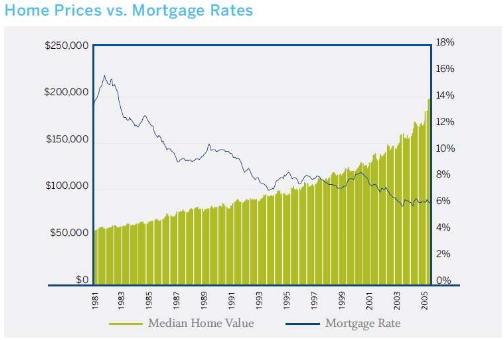
Table 1. Source: S&P/Case-Shiller Home Price Indices (CSI)
Government officials like regulators, policy makers, important civil society stakeholders and the executive as well as the judiciary are involved in having to prioritize the interests of wealthy investors rather than the middle- or lower-class citizens find themselves in a very difficult position. Medium housing complexes are bought by very distant unknown entities or conglomerates. They are renovated and sold for very expensive amounts, or better are kept empty as a source of security and better to say assets.
In module 4 of this class, we have learnt that we don’t have binding international regulations which govern the way financial businesses are conducted generally but also in terms of acquisition of real estate, purchase of middle class or medium income housing complexes. We learn that international regulatory body like Basel (in Switzerland) 3 of 2009 after the financial crisis of 2008, which was adapted in 2010 by the G20, would meet together from time to time and suggest possible protocols to follow or guidelines. And certainly a few countries appreciated these rules, but the classical follow-up and the critical observation in the way that such suggestions would be implemented in particular states across the globe, could not and has not been verified up to this very day.
Professor Schiller suggests that there are obvious loopholes in the procedures of regulators, although most of those he corresponded with over the years were very intelligent and very committed civil servants, but it is certain that there are compromises and lack of responsibility of fairness at times. There are tendencies of irregularities, dishonesty and cheating. The observations here above, sink in well with those of Ms. Farha who emphasizes that states encourage financial entities to overwhelm the occupation of low-income housing. by abandoning the responsibility of social housing and allowing these services to be taken on by the private market sector as a solution.
The Rapporteur indicates that access to justice for low income people in different countries unfortunately is almost impossible. Leilani Farha observed that housing claims remains elusive for many. Many have limited access to legal aid in addition to excessive backlogs in courts of law. This is a reality which gets in the way of any possible mitigation actions internationally.
[/vc_column_text][vc_column_text el_class=”font-18px”]
Conclusion
I am convinced that states will ever hardly be empowered enough to regulate and drive private investments in the interest of rights to affordable housing. Efforts of mitigation are met with resistance from those who gain from the financialization of housing. State policies of are accountable to investors rather than to human rights and because of investments and financial personal interest of some government officials like regulators, policymakers, lobbyists including the judiciary and the executive, it makes it almost impossible to properly implement innovative and meaningful resolutions in the interest of the poor. Here I find that housing policies of states are accountable to traders, investors rather than the paramountcy human rights.
References
Leilani Farha. (1st March 2007) Statement by the Special Rapporteur on the right to adequate housing, during the Interactive Dialogue at the Human Rights Council. https://www.ohchr.org/en/NewsEvents/Pages/DisplayNews.aspx?NewsID=21264&LangID=E
Human Rights Council Thirty-fourth session. (27 February-24 March 2017) Report of the Special Rapporteur on adequate housing as a component of the right to an adequate standard of living, and on the right to non-discrimination in this context.
https://documents-dds- ny.un.org/doc/UNDOC/GEN/G17/009/56/PDF/G1700956.pdf?OpenElement
[/vc_column_text][/vc_column][/vc_row][vc_row][vc_column][vc_btn title=”DOWNLOAD PDF” style=”flat” color=”blue” size=”lg” align=”center” i_type=”openiconic” i_icon_openiconic=”vc-oi vc-oi-down-circle” add_icon=”true” link=”url:https%3A%2F%2Fgerman-academic-institute.eu%2Fwp-content%2Fuploads%2F2020%2F06%2FFinancialization-of-Housing-and-its-effects-on-Human-rights-by-Jimmy-Godfrey-Mpungu.pdf||target:%20_blank|” css=”.vc_custom_1592947358489{margin-top: 100px !important;}”][/vc_column][/vc_row]